
July 7, 2026
You have sat across from someone who says all the right things. Confident, polished, hitting every note you hoped to hear. And somewhere underneath the conversation, there’s a small, quiet unease you can’t quite name. That unease is accurate information, not paranoia, and learning how to spot a real professional starts with understanding why.
Most owners work outside this industry, and struggle to evaluate qualification. Sales and execution skills are two entirely different competencies, and nothing on the surface tells you which one you’re looking at. I’ve sat on both sides of that table, both as the evaluator and the one being evaluated. Here’s how you spot the difference.
Three tiers of professional credibility
Picture a pyramid. Three tiers, and as you move up, the available pool contracts.
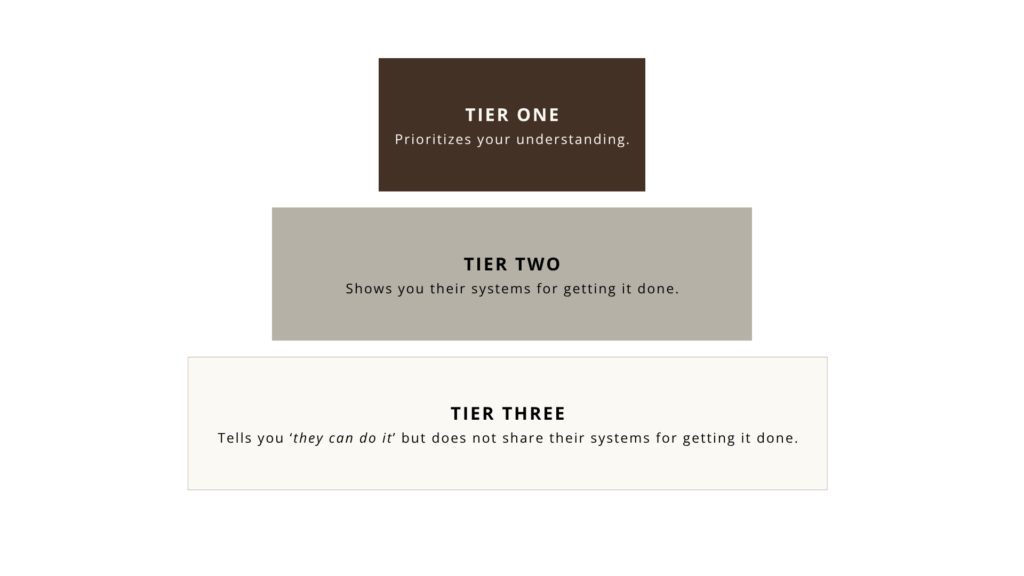
Tier three, the base, is the service providers who tells you they can help, and backs it with the bare minimum: find an architect or draftsman, get your drawings and tell me your budget. I’ll give you a bid and we’ll start construction. That’s a sequence, not a system. It tells you the order of operations. It doesn’t tell you how they catch problems, how they make decisions, or what happens when an item goes astray.
This is a real dragon, a service provider wearing the professional label without any of the substance, and a guaranteed path to future frustrations and failures. FULL STOP: if you don’t read any of the rest of this article, avoid this person at all costs.
Tier two, the middle, is the professional who shows you a real system. A process, a checklist, a schedule. A real system they’ve built and refined over years of doing the work. Unlike tier three, this person has a framework for delivery. This is the minimum standard that I advise clients to look for. It can work.
Now, where it still comes up short: They built it for people inside the industry. Oftentimes it’s full of shorthand nomenclatures that make sense to other professionals, but is difficult for owners to fully grasp and evaluate from across the table.
Tier one, the top of the pyramid, is the ideal partner for your project. This is the professional who has taken their internal system one layer further and translated it into a format the owner can stand inside. Not simplified, but rather explained in a way that builds understanding. There’s a marketing instinct in it, but not the sleazy kind. It lets you see yourself inside their process and how your relationship will strengthen through the process.
Let’s look at an example from a recent conversation.
How to spot a tier one professional
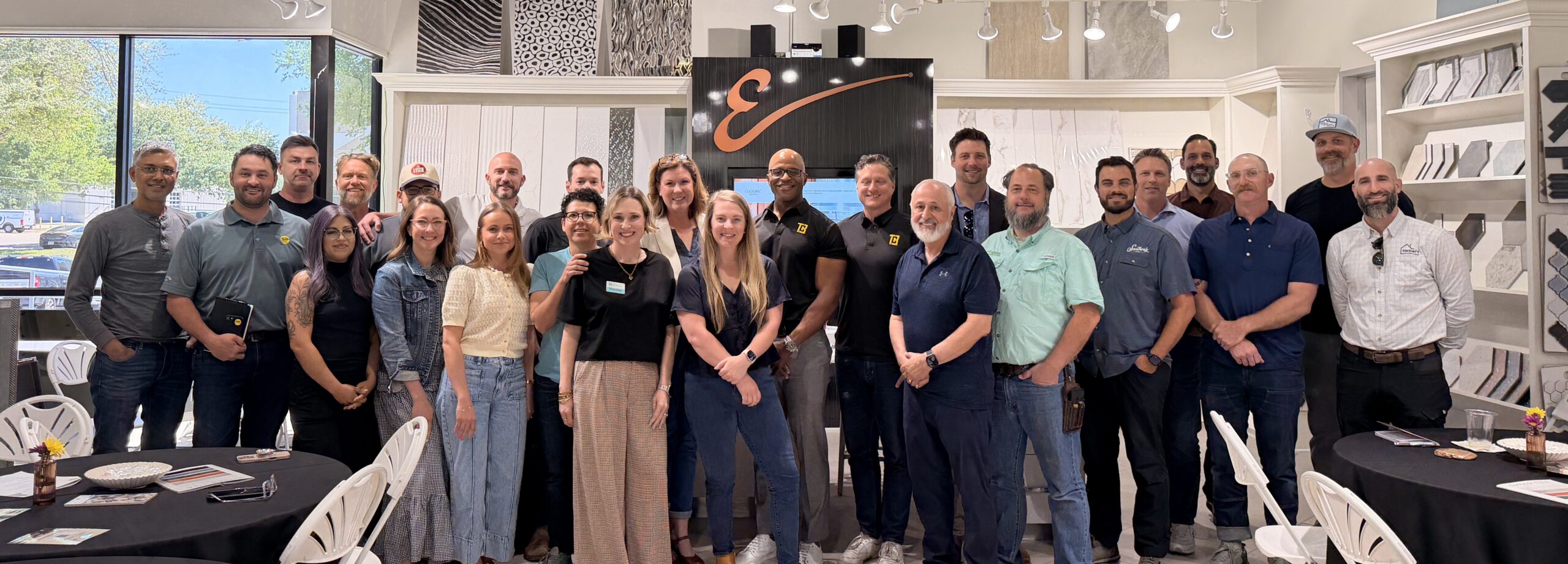
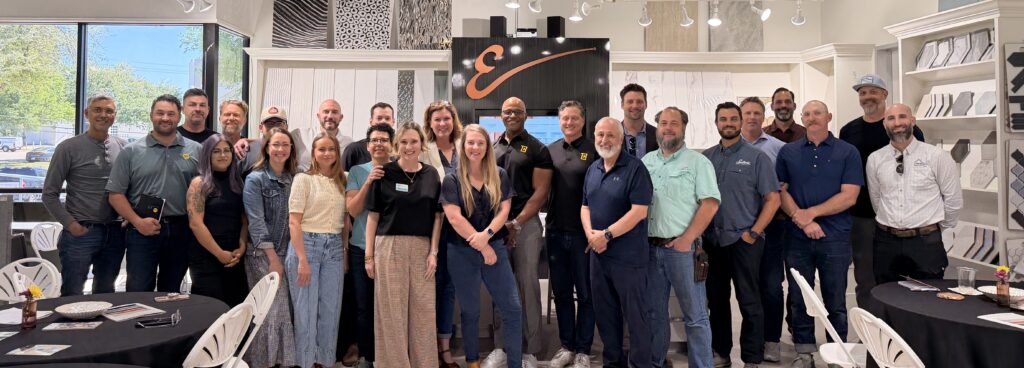
I regularly attend The Curious Builder Collective in Austin to stay up-to-date with industry partners. This small cohort of builders and design professionals meets quarterly to sharpen exactly their tier one craft.
During a small group discussion, someone shared what another professional uses to walk owners through their build process – a coffee table book. It used one of their past projects to walk the owner phase by phase from pre-construction through completion. Each picture shows the actual process behind the work. It highlights what an owner could expect during a (construction) walkthrough, what they checked during rough-in, how they made decisions along the way.
The builder built the presentation so an owner who has never worked inside this industry could still follow every page and understand exactly what they’re paying for. That’s how you spot a real professional. Of course, this isn’t the only way you can spot a tier one professional, but it is a real example of a professional valuing understanding and partnership over just closing the deal.
How to apply this insight (in real life)
Now, if you’re an owner reading this, asking yourself, “This is great information, but how do I apply it to my situation?” I see you.
LittleCreek+Co. is built on a foundation of People, Priorities, Place. Think of it as a three-legged stool. Align the three Ps inside your project, and it becomes a stable seat. Ignore or unknowingly skip an important detail for one and you could end up sitting on the floor.
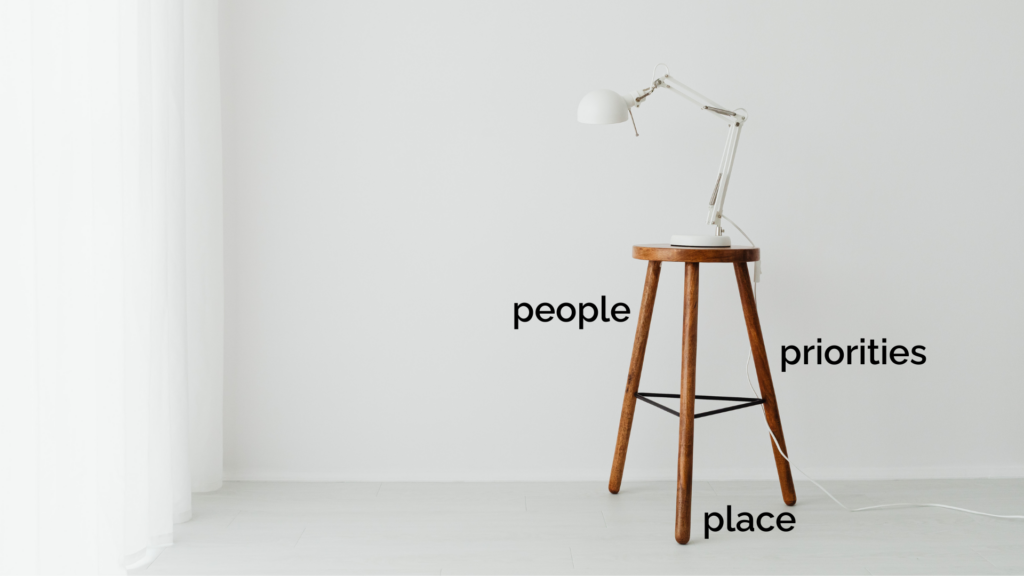
The professionals you invite to your table are part of the first P: People. And you may already have vulnerabilities at play inside your project. The 3P Assessment is built to help you test whether your foundation is solid, and where it still needs work. It’s complimentary and only takes eight minutes.
If you have a project with real stakes, I invite you to get your 3P score.
Simply check the link below, and I’ll send your 3P Assessment straight to your inbox.

Comments